What they are, plainly
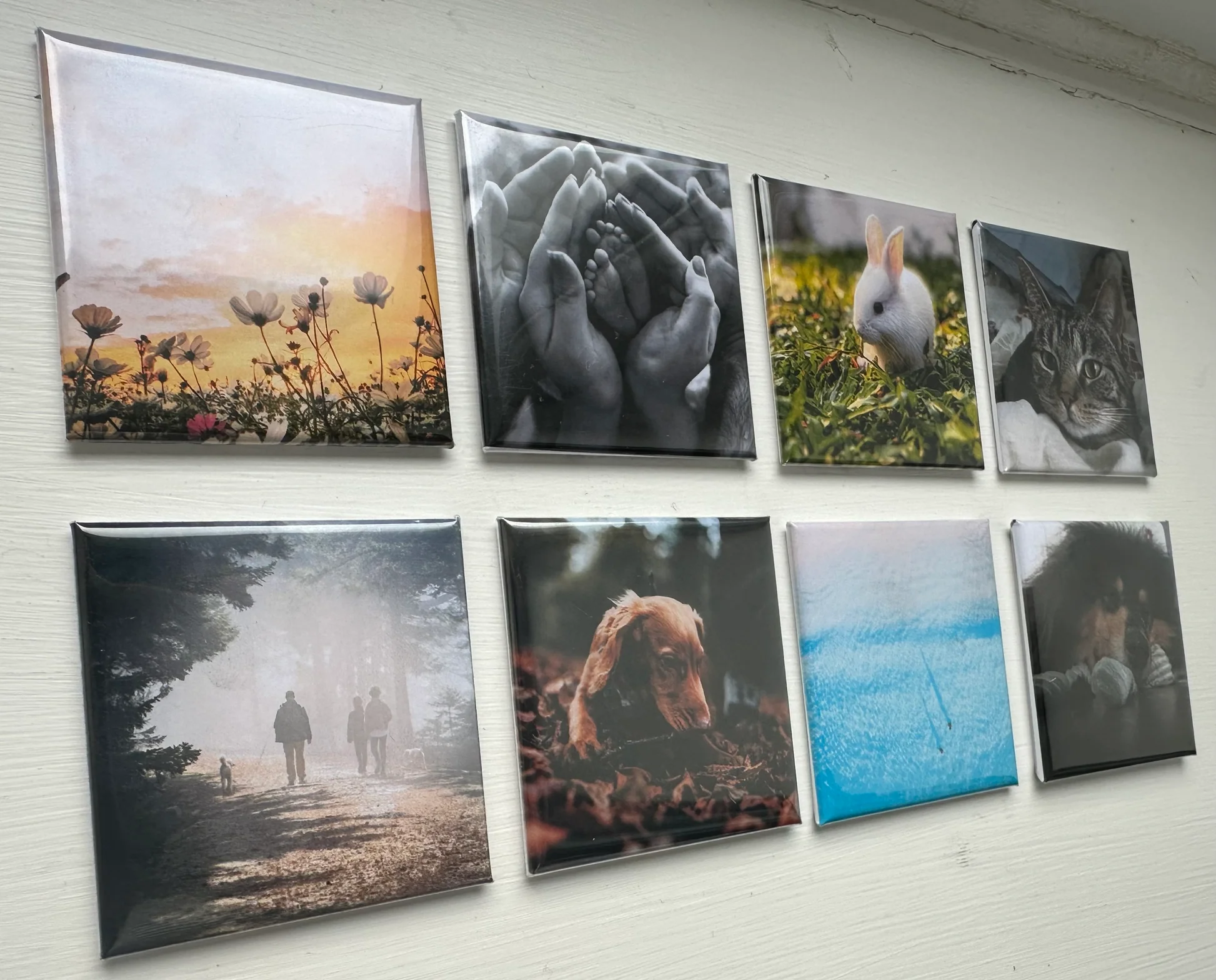
A photograph printed onto flexible magnetic stock, trimmed to a small square, rectangle, or circle, and stiff enough to hold its shape for years on a metal surface. That is the entire object. Nothing about the manufacturing is remarkable, and pretending otherwise would be silly. What makes one worth owning is the editorial decision in front of it: out of many thousands of images, somebody chose this one and committed it to something physical.
Choosing beats collecting
The instinct is to print a batch of whatever is recent, and it produces a door nobody looks at twice. Pieces that hold attention come from a shortlist you already return to without prompting. A first morning of school. The final summer with a dog who is gone now. A kitchen in a flat you could barely afford. When every piece has a reason to exist, the set gains a thread, and a viewer feels it even if they could not name what ties the group together.
Sizes, and what each one suits
Ours come in four formats. A 2x2 inch square is the everyday workhorse and groups neatly into a grid. A 2.5 inch square carries slightly more presence for the picture you want noticed first. A 2x3 inch rectangle suits an image with a date or a couple of names alongside it. A 2.25 inch die-cut circle frames a single face softly and breaks up a wall of straight edges. Packs come in sixes and nines, which is roughly where a handful becomes a story.
A day worth keeping, kept
Some moments deserve to outlive the week they happened in. A wedding is the obvious one, and the pictures from it usually get looked at intensely for a month and then almost never again. A printed piece rescues one frame from that fate and hands it a place in ordinary life, where it goes on quietly doing its job years later. The wedding memory magnets guide works through that case at length. The same is true of a christening, a graduation, a last family gathering before somebody moved. The scale of the occasion matters far less than whether you still want to see it in five years.
Distance is the strongest argument
Where this format really earns its keep is across geography. A grandparent several time zones from the grandchildren gets faces that update. A sibling who moved abroad keeps a fragment of the place they came from. Because the pieces are flat, light, and close to unbreakable, they post cheaply and arrive intact, which matters when the alternative is another photograph that only ever existed on a screen the other person has to unlock first.
Why not just frame it
A frame comes with conditions. It needs wall space, a hook, and a decision about the room it belongs in, and those conditions are exactly why framed prints sit in their packaging for months. Magnetic stock asks for none of that. It goes straight onto the surface the household already uses and starts working immediately. Browse the shop for current sizes and sets, or read the photo magnets hub if you are still weighing formats.
Rotate, and keep an archive
A display works best when the retired pieces have somewhere to go. A small tin does it, with sheets of paper between the layers so the printed faces do not bond to each other over time. After a few years that tin turns into something unexpectedly good: a stack of small printed moments you can hand across a table and flip through together, no battery, no password, no scrolling past three hundred near-identical shots to find the one that mattered.